Ballistic Resistant Window Film in Los Angeles: Securing LAUSD at Scale

Ballistic resistant window film in Los Angeles is the only glass security solution deployable at LAUSD's scale — 900+ schools, 400,000+ students, a multi-fault seismic basin, and daily glass threats from vandalism and forced entry. Independently certified, cost-accessible, and deployable overnight without construction. The practical glass hardening solution that actually fits a mega-district's reality. Guided by IWFA standards.

The LAUSD Scale Challenge: 900+ Schools, One Practical Glass Security Solution

LAUSD is the largest school district in California and one of the largest in the United States — over 900 schools serving more than 400,000 students from San Pedro to the San Fernando Valley. When district safety leadership identifies glass vulnerability as a hardening priority, the question isn't just "which product works?" — it's "which product can actually be deployed across 900+ buildings within a realistic budget and timeline?" The answer is ballistic resistant window film.

Structural security upgrades — reinforced vestibules, panic hardware, laminated glass replacement — address glass vulnerability at the building level but require architectural planning, building permits, and capital budget allocations that take years to move through LAUSD's procurement and board approval processes. Security film bypasses that entire timeline. It can be specified at the district level, procured in volume, and deployed across multiple buildings simultaneously by trained installation crews working on school hours.

For LAUSD's facilities management team, the math is compelling: the cost to film every first-floor window and entrance door at a typical LAUSD campus is a fraction of the cost to replace those windows with laminated glass. Multiply that across a multi-year phased program, and LAUSD can achieve meaningful glass security across its entire building portfolio for what it would cost to do a handful of full glass replacement projects at a single school.

  • District-Scale Deployment — Film is the only security upgrade that can reach 900+ LAUSD campuses
  • Volume Procurement Advantage — District-level purchasing reduces per-school cost
  • No Permit Required — Applied to existing glass, no building permits or construction delays
  • Parallel Multi-Campus Install — Multiple crews deployed simultaneously across the district
  • Phased Budget Model — Priority areas first, complete coverage over a multi-year plan

The Real Daily Threats at LA Schools: Vandalism and Forced Entry, Not Just Shooters

The national conversation about school security is dominated by active shooter scenarios. At many Los Angeles schools, the glass threats that facilities staff actually deal with on a daily or weekly basis are more mundane: graffiti etching, rock and projectile impacts from nearby streets, overnight vandalism and smash-and-grab attempts, and opportunistic forced entry during breaks and evenings. These threats cause real financial damage and create real safety hazards — and they happen at LAUSD schools far more frequently than active threat events.

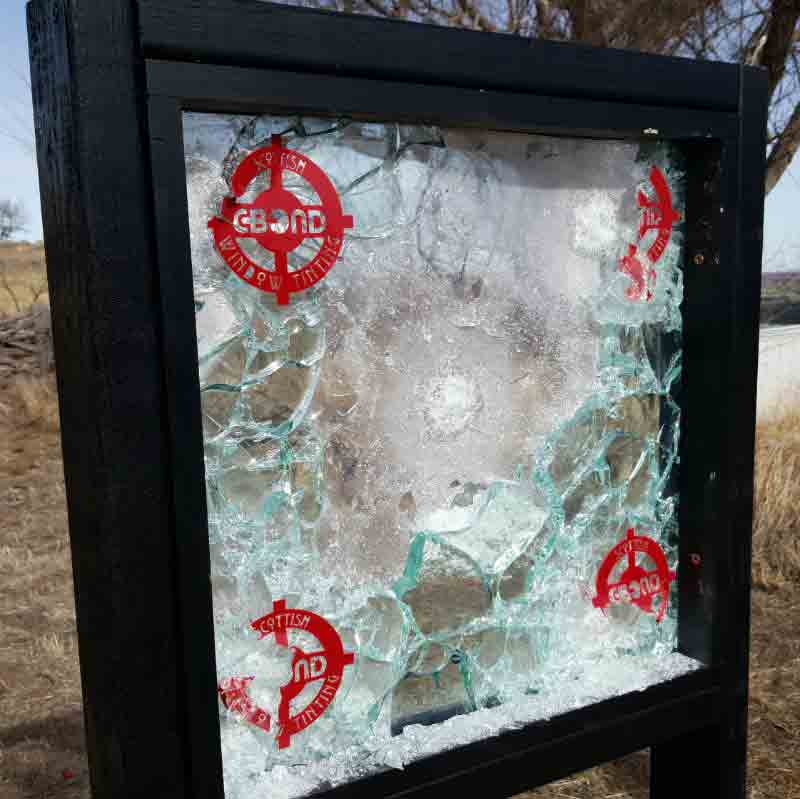
Ballistic resistant window film addresses these everyday threats directly. A rock that would shatter an unprotected window now bounces off film-protected glass with minimal damage. A smash-and-grab burglar who could step through a shattered window in three seconds now faces a glass-film composite that requires 30 to 60 seconds of sustained, loud effort — triggering alarm systems and neighborhood attention. Graffiti-resistant overlaminate options can also be specified for ground-floor glass to reduce the cost of graffiti remediation.

For LAUSD facilities managers tracking glass replacement costs, the reduction in break-ins and vandalism-related glass replacement can justify a significant portion of the film installation cost within the first two to three years after installation. Schools that previously replaced glass panels multiple times per year often see that cost drop to near zero after security film installation.

  • Vandalism Resistance — Film dramatically increases strikes needed vs. single-blow unprotected glass
  • Smash-and-Grab Deterrence — 30–60 seconds of sustained effort vs. instant 3-second shattering
  • After-Hours Protection — Works when staff isn't present; gives alarms time to respond
  • Graffiti Overlaminate Option — Sacrificial film layer reduces etching remediation costs
  • Glass Replacement Cost Reduction — Many schools recover installation cost within 2–3 years

Southern California's Fault Network: Why LA Schools Need Seismic Glass Retention

The Los Angeles Basin sits at the intersection of one of the most complex and densely developed fault networks in the world. The San Andreas Fault — the primary boundary between the Pacific and North American plates — runs along the northern and eastern rim of the metro area. The Puente Hills Fault runs directly beneath downtown Los Angeles and was responsible for the 1987 Whittier Narrows earthquake. The Newport-Inglewood Fault crosses through communities from Culver City to Long Beach. The Hollywood Fault runs along the base of the Santa Monica Mountains through some of LA's most densely developed neighborhoods.

Each of these fault systems is capable of generating a significant earthquake within the urban core of Los Angeles. In an urban earthquake scenario, conventional glass is one of the primary sources of non-structural injury: panels flex, crack, and shatter, projecting fragments into rooms and blocking evacuation corridors. At LAUSD scale, with hundreds of campuses each containing thousands of glass panels, the total glass fragmentation risk in a major seismic event is enormous.

Ballistic resistant window film addresses the seismic glass fragmentation risk with the same mechanism it uses for ballistic and forced entry threats: fragment retention. Glass that cracks under seismic load stays bonded to the film, preventing fragmentation and preserving evacuation routes. For LAUSD facilities management, seismic glass retention is not a bonus feature — it is a documented, measurable safety improvement that the district can report to its safety committee and board.

  • San Andreas Fault — Northern and eastern metro area, major rupture risk
  • Puente Hills Fault — Directly beneath downtown LA, urban core seismic threat
  • Newport-Inglewood Fault — West LA through Long Beach corridor
  • Hollywood Fault — Densely developed residential communities at base of Santa Monicas
  • Seismic Fragment Retention — Glass stays bonded to film across all fault-triggered scenarios

What Ballistic Resistant Window Film Does — and What It Doesn't

Security film is a high-performance tool with specific, documented capabilities. Being clear about what it does — and what it doesn't — helps LAUSD safety directors and school board members make accurate decisions about where it fits in a layered security strategy.

What film does: It dramatically increases the time required to breach a glass surface. Against forced entry and vandalism, it converts a 3-second shattering event into a 30-to-90-second sustained effort. It retains all glass fragments when glass cracks — under both impact and seismic load — preventing the secondary injury hazard of glass shards projecting into rooms. Against ballistic threats, it slows projectile velocity, contains glass fragmentation, and delays penetration even when the glass ultimately fails.

What Film Does Not Do

What film doesn't do: It does not make glass bulletproof in the movie sense. Against higher-caliber rounds at close range, even the best ballistic film will eventually fail — but it slows penetration, buys time, and eliminates the glass fragmentation hazard. It does not replace access control, camera systems, or trained security staff. It is one layer in a layered security strategy — the layer that addresses the most common physical vulnerability in any school building: its glass.

  • Accurate Expectations — Film is a time-buying and fragment-retention tool, not impenetrable glass
  • Layered Security Role — Complements access control, cameras, and security staff, not replaces them
  • Breakthrough Time — 30–90 seconds for forced entry vs. 3 seconds unprotected
  • Fragment Elimination — All glass shards bonded to film under any impact type
  • Documented Performance — UL and ASTM certified data confirms specific capabilities

Certifications and the Data LAUSD Safety Directors Need

LAUSD operates under multiple layers of California school safety oversight, and any security investment needs to be defensible with documented performance data. The products we install at Los Angeles-area schools and facilities are independently tested and certified against UL 752 (Bullet-Resisting Equipment) and ASTM F1233 (Standard Test Method for Security Glazing) — the same standards referenced in California school safety planning documents and used for government facility security specifications throughout the state.

For LAUSD board presentations and safety committee reviews, having certified test data — not vendor claims — is essential. Our technical data sheets provide specific, verified performance ratings for each product: forced entry breach time, fragment retention performance, and where applicable, ballistic resistance ratings against specified calibers at specified distances. These numbers are what safety directors need to justify an investment of this scale.

Download the complete technical documentation library for your LAUSD safety or facilities team:

C-Bond: Maximum Performance in Southern California's Climate

The C-Bond molecular adhesion system provides a measurable performance improvement over standard adhesive installation that is specifically relevant for Southern California's climate conditions. Applied to the glass surface before film installation, C-Bond modifies the glass at the molecular level to create a stronger, more uniform bond between the glass substrate and the film's pressure-sensitive adhesive layer.

In Southern California's climate — hot, dry summers; occasional coastal humidity; significant temperature cycling between seasons — film adhesive bonds at glass edges can degrade over time. Edge lifting is the most common long-term film failure mode and directly compromises fragment retention performance. C-Bond's molecular bonding significantly reduces edge lifting risk and extends film service life, an important consideration for LAUSD facilities that need installations to perform reliably over 10-to-15-year service lives.

For seismic glass retention — critical in the multi-fault LA Basin — C-Bond-enhanced installations consistently outperform standard-adhesive installations of the same film in fragment retention under dynamic seismic load testing. We specify C-Bond as standard on all high-security ballistic film installations throughout Los Angeles County. Review the C-Bond Systems technical documentation for independent performance validation.

  • Molecular-Level Adhesion — Stronger bond than standard installation in any climate
  • Southern CA Edge Durability — Resists LA Basin thermal cycling and coastal humidity
  • Multi-Fault Seismic Performance — Better fragment retention under complex multi-directional seismic load
  • 15-Year Service Life Protection — Critical for LAUSD's long-term facility investment
  • Standard on High-Security Jobs — Included in all our ballistic film proposals

Our Product Lineup for Los Angeles Schools and Commercial Facilities

We carry the most thoroughly certified ballistic and security window film products available, selected on the basis of independent test data, long-term Southern California climate performance, and documented real-world results in Los Angeles-area installations. Every product we recommend comes with full certification documentation, manufacturer warranty, and certified installation by our trained technicians.

For highest-security applications — main school entrances, administrative wings, ground-floor classrooms facing public areas, and any glazing identified as priority in a security assessment — the 3M ScotchShield Ultra S800 is our recommendation. It delivers the strongest documented glass retention and breach delay performance available in an after-market film product, with UL 752 ballistic certification and GSA-TS01 blast ratings.

For LAUSD's broad coverage needs across thousands of classroom windows and corridor glass, the 3M Safety & Security S70 and S80 series provide excellent forced entry resistance and fragment retention at a cost-per-square-foot that makes district-scale deployment feasible. The Hanita Coatings 12-mil clear safety film offers a certified alternative with strong international test data for districts requiring competitive bid processes.

  • 3M ScotchShield Ultra S800 — UL 752-tested, GSA-rated, premium ballistic performance
  • 3M Safety Security S70/S80 — Mid-range forced entry and fragment retention for district scale
  • Hanita 12-Mil Clear Safety Film — Heavy-duty alternative for competitive procurement
  • C-Bond Molecular System — Maximum adhesion on all high-security installations

Beyond Security: UV, Heat, and Glare Control for LA's Climate

In Los Angeles's 300-plus sunny days per year, the secondary benefits of high-performance security film are genuinely significant for LAUSD schools. Quality security films block 99% of UV-A and UV-B radiation, protecting student health from chronic sun exposure and slowing the degradation of classroom furnishings, flooring, and equipment. For schools with aging building stock where furniture and flooring budgets are stretched, the preservation benefit has real operational value.

Glare is a persistent educational challenge in Southern California classrooms. Low winter sun angles from October through February create intense glare through south and west-facing windows, making screens, whiteboards, and projectors difficult to use during the morning and afternoon school hours when glare is worst. Security films reduce this glare significantly without sacrificing the natural light that keeps classrooms welcoming and energy-efficient.

Solar heat gain is another practical concern for LAUSD schools, many of which lack central air conditioning or have aging, undersized HVAC systems. In the San Fernando Valley and inland areas where summer temperatures regularly exceed 100°F, the solar heat load through unprotected glass is substantial. Security film reduces solar heat gain, lowering afternoon classroom temperatures and reducing the cooling burden on older mechanical systems — a direct operational benefit that teachers and students notice.

  • 99% UV Blocking — Protects student health and extends classroom asset lifespan
  • Winter Glare Control — Better screen and whiteboard visibility during peak glare hours
  • Valley Summer Heat Reduction — Lower solar heat load in San Fernando Valley and inland campuses
  • HVAC Load Reduction — Meaningful cooling cost savings for LAUSD's older mechanical systems
  • Year-Round Comfort — Moderates temperature and light extremes across LA's diverse microclimates

Professional Installation Across the Greater LAUSD Footprint

At LAUSD scale, installation quality and operational logistics matter as much as product selection. Ballistic resistant window film performs only as well as the quality of its application — and deploying across a large urban district requires installation teams that can work efficiently, reliably, and entirely outside school operating hours. Our Los Angeles installation team is manufacturer-certified, experienced with LAUSD's diverse building stock, and built for multi-campus district deployment.

We schedule all school installations during evenings, weekends, and school breaks. For LAUSD's multi-building campuses, we deploy multiple certified crews simultaneously to complete safety upgrades within tight operational windows. We coordinate directly with LAUSD facilities directors, school principals, and after-hours security to ensure access, minimize any operational impact, and complete work cleanly and on schedule.

Every installation includes a pre-work glass inventory, condition assessment, and post-installation panel-by-panel inspection. We provide LAUSD facilities with complete installation documentation — product specifications, coverage maps, and installation dates — formatted for inclusion in the district's California safety plan records and facility management systems.

  • Manufacturer-Certified Technicians — Trained to specification on every LAUSD project
  • LAUSD Operations-Aware — Evenings, weekends, and school breaks only
  • Multi-Campus Parallel Deployment — Multiple crews for compressed district timelines
  • Diverse Building Stock Experience — Mid-century to modern construction, all glass types
  • CA Safety Plan Documentation — Full records formatted for LAUSD compliance

Building a Phased LAUSD Campus Hardening Plan

A district the size of LAUSD cannot harden its entire glass envelope in a single budget year — and it doesn't need to. A well-designed phased implementation plan can deliver meaningful, measurable security improvements across the highest-risk campuses immediately while building toward complete district coverage over three to five years. The key is starting with a clear prioritization framework.

Typical prioritization criteria for LAUSD glass hardening plans include: campuses with documented histories of glass-related security incidents; schools in areas with elevated vandalism or forced-entry frequency; buildings with the most vulnerable glass configurations (large single-pane ground-floor windows, glass-lined entrance vestibules); and schools identified as high-priority in the district's existing Comprehensive School Safety Plans.

We work with LAUSD facilities management to develop these phased plans from the ground up. Our site assessment process documents the glass inventory, condition, and vulnerability profile for each building evaluated. The written plan we provide includes per-campus prioritization rankings, cost breakdowns, installation timelines, and all certification documentation needed for board presentation and California state safety reporting. We can also present directly to LAUSD's facilities committee or safety board.

  • Three-to-Five Year Phased Model — Realistic implementation at district scale
  • Data-Driven Prioritization — Incident history, building vulnerability, and Safety Plan alignment
  • Per-Campus Cost Transparency — Detailed breakdowns for LAUSD budget planning
  • Board Presentation Available — Direct presentation to LAUSD's facilities or safety committee
  • CA State Safety Reporting Support — Documentation formatted for required state submissions

Protecting Schools, Entertainment Studios, and Community Buildings in LA

Our ballistic resistant window film installations serve the full range of Los Angeles-area facilities with glass vulnerability challenges — not just schools. The entertainment industry that defines Los Angeles creates a distinct set of security needs for studio facilities, production offices, talent agencies, and media companies that share many of the same glass vulnerability characteristics as schools: large glass facades, high-volume foot traffic, and high-value assets that attract unwanted attention.

For Los Angeles's extensive network of houses of worship — serving communities from Koreatown to East LA to the South Bay — glass security is a documented concern that our houses of worship security film program addresses with both clear and decorative security film options. Government facilities throughout Los Angeles County requiring GSA-compliant blast mitigation specifications are also within our service capability.

For entertainment industry corporate campuses, studio facilities, and talent headquarters, our secured buildings window film program addresses commercial high-security requirements with the same certified products and professional installation. This is particularly relevant for Burbank and Culver City media complexes, where large glass-envelope campus buildings create significant perimeter vulnerability.

  • LAUSD K-12 Campuses — Elementary through high school, district-wide deployment
  • Community Colleges — LACCD campuses throughout the metro area
  • Entertainment Studios & Media — Burbank, Culver City, and Hollywood facilities
  • LA County Government — GSA-compliant blast specifications available
  • Houses of Worship & Community Centers — All communities throughout LA County

Schedule Your Free Los Angeles School Security Assessment

Protecting students, staff, and facilities at your Los Angeles school, district campus, or facility from the glass threats they actually face — daily vandalism, forced entry, multi-fault seismic fragmentation, and active threat scenarios — starts with an honest, site-specific assessment. Our security film specialists serve schools and facilities throughout Los Angeles County, from the San Fernando Valley and the Westside to East LA, South LA, Long Beach, and the South Bay.

We bring LAUSD-scale experience, Southern California seismic awareness, and certified product expertise to every assessment. Our proposals are built for real district budgets, structured for LAUSD board presentation, and include all certification data, product specifications, timeline, and per-campus pricing that your facilities team needs to plan and execute a glass hardening program.

Contact us for a no-cost, no-obligation site assessment. We will evaluate your school's glass vulnerabilities across both everyday and extreme threat scenarios, develop a prioritization framework for your campus or district, and provide a written proposal that your safety director, facilities team, or school board can act on immediately.

  • Serving All of LA County — San Fernando Valley, Westside, East LA, South LA, Long Beach, South Bay
  • LAUSD Experience — Familiar with district procurement processes and CA safety requirements
  • Multi-Fault Seismic Assessment — All relevant LA Basin fault scenarios evaluated
  • No-Obligation Proposal — Free site assessment, certified data, and per-campus pricing
  • District-Scale Flexibility — Single campus or multi-building phased program planning

Contact us today to schedule your free ballistic resistant window film assessment for your Los Angeles school or facility.


Get a Quote